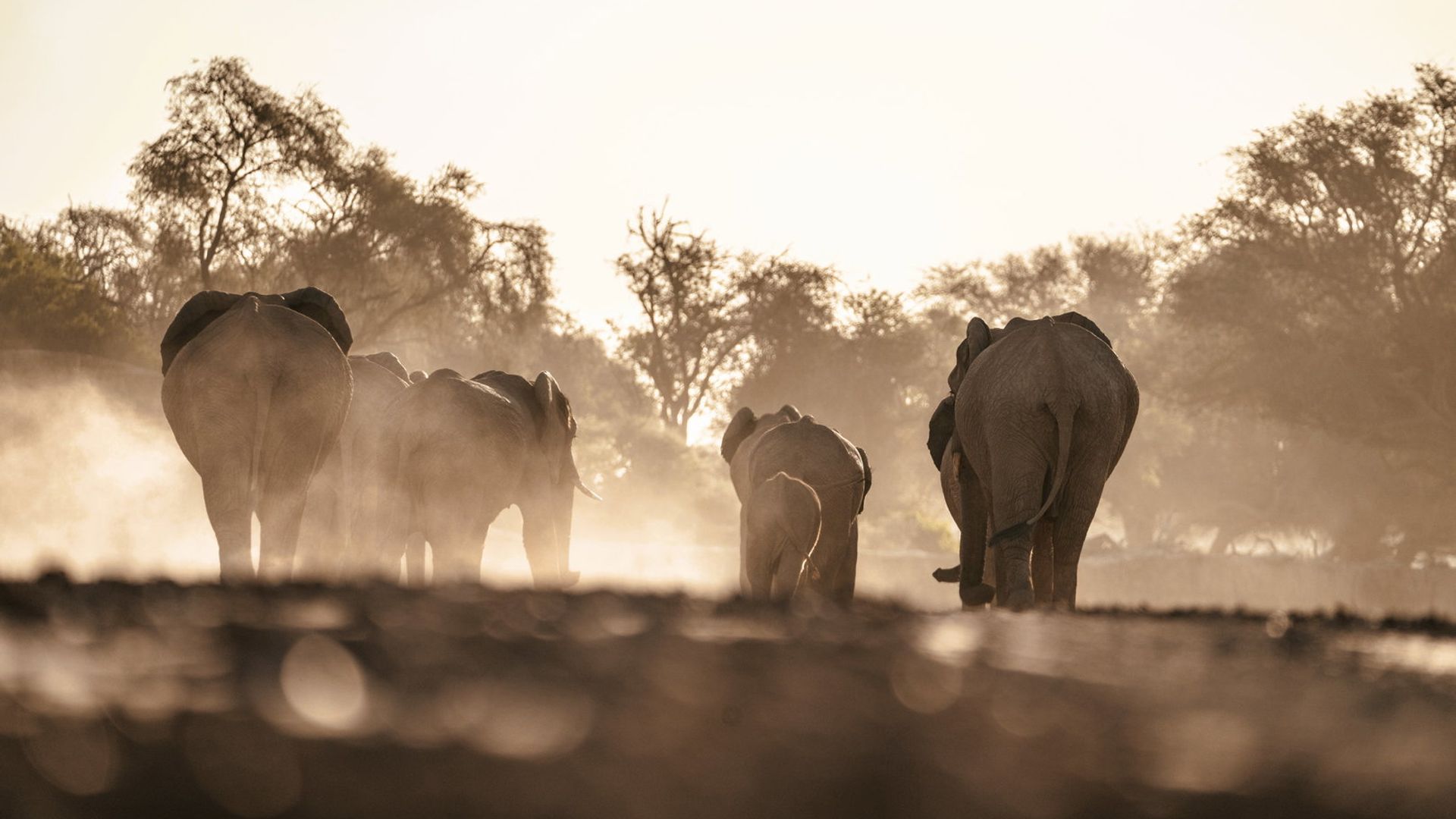

A new safari camp opens on the western boundary of Namibia’s Etosha National Park on 1 June 2027. Wilderness Etosha has eight suites in the Hobatere Concession, with game drives on the concession and into the park.
West of Etosha, elephants climb mountains. The concession lies within the range of Namibia’s highland elephants, a little-known population that recent research, supported by satellite tracking, has shown climbing steep, rocky slopes to reach the food plants they prefer. This is an area of rocky mountains, dry riverbeds, natural springs and open savannah, and it is part of the bridge that connects Etosha with the Skeleton Coast.
Quick Facts:
Opening date: 1 June 2027
Location: Hobatere Concession, on the western boundary of Etosha National Park, north-west Namibia
Suites: Eight
Children: Aged 6 and over. Families with children aged 12 and under book a private vehicle (subject to availability, at additional cost)
What Is Wilderness Etosha?
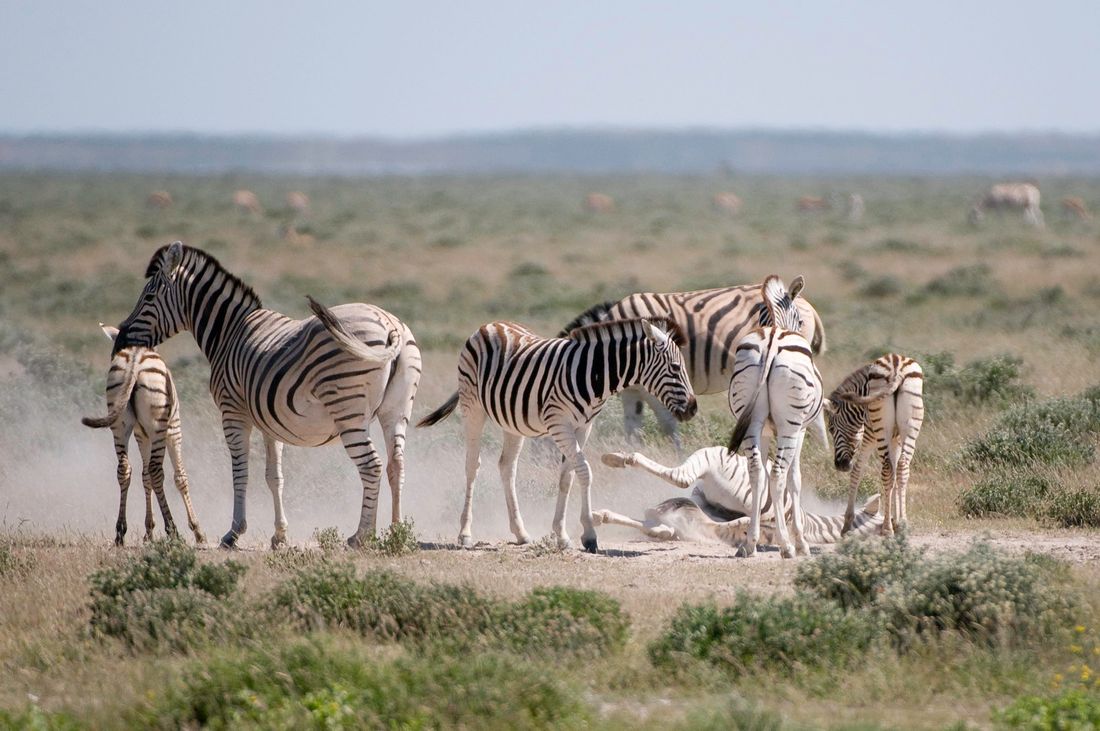
Wilderness Etosha is a new camp from Wilderness, with eight suites, a pool and a boma. It stands in the 4,200-hectare Hobatere Concession, against the park’s western boundary.
On the concession, game drives run by day and at night, guided walks go out on foot, and a hide overlooks a waterhole. Day drives also go into Etosha National Park, and the guiding interprets the landscape as well as the wildlife, drawing on current research.
With two full days here, I’d give the first to the concession (on foot and at the hide) and keep the drive into the park for the second.
Children aged 6 and over are welcome. Families travelling with children aged 12 and under book a private vehicle, which is subject to availability and comes at additional cost, and some activities carry their own minimum ages.
The Land Bridge Between Etosha and the Skeleton Coast
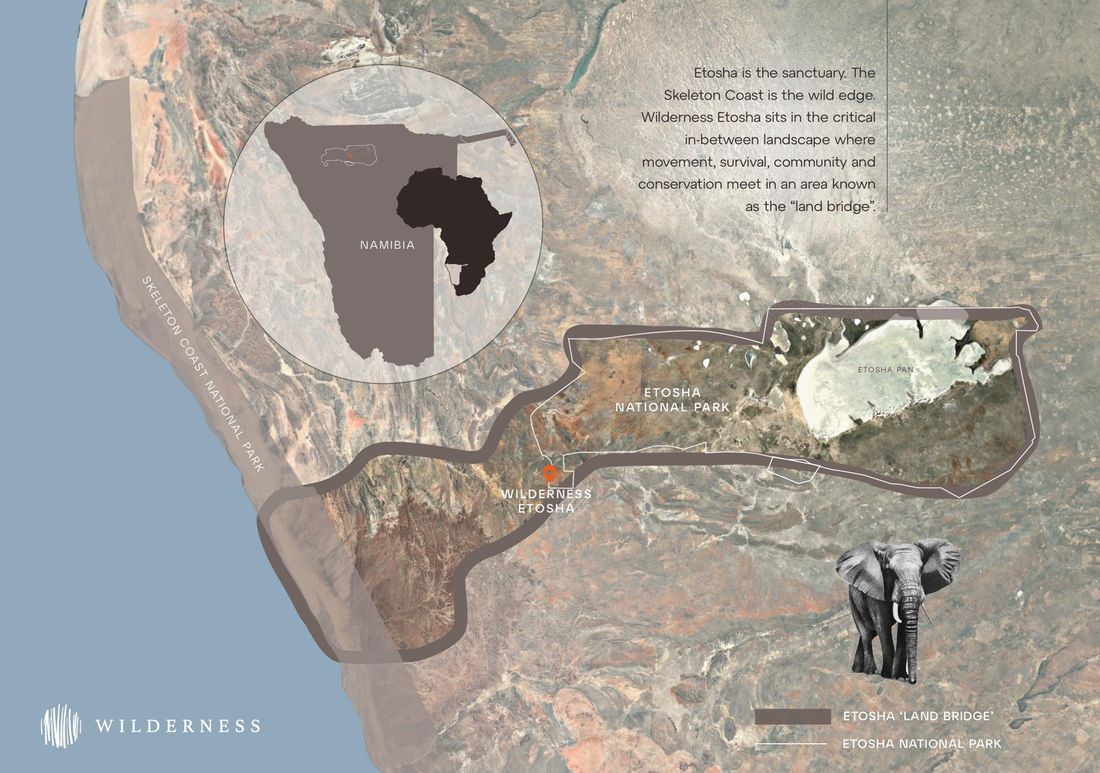
Hobatere is part of the Etosha - Skeleton Coast land bridge, roughly 55,000 km² of north-west Namibia that connects the national park with communal conservancies and the Skeleton Coast. Fourteen of those conservancies form its heart. Across all of it, Namibia’s wildlife is able to move in response to rainfall, water and the seasons.
For elephants, that connection is especially important. Research shows that elephants spend relatively little time inside national parks, relying instead on communal conservancies and the natural movement corridors across wider landscapes.
Hobatere sits at one of the thresholds that keep western Etosha joined to the conservation areas of the north-west. Satellite tracking and local ecological knowledge have also shown Namibia’s highland elephants using ground that was once thought unsuitable for elephants.
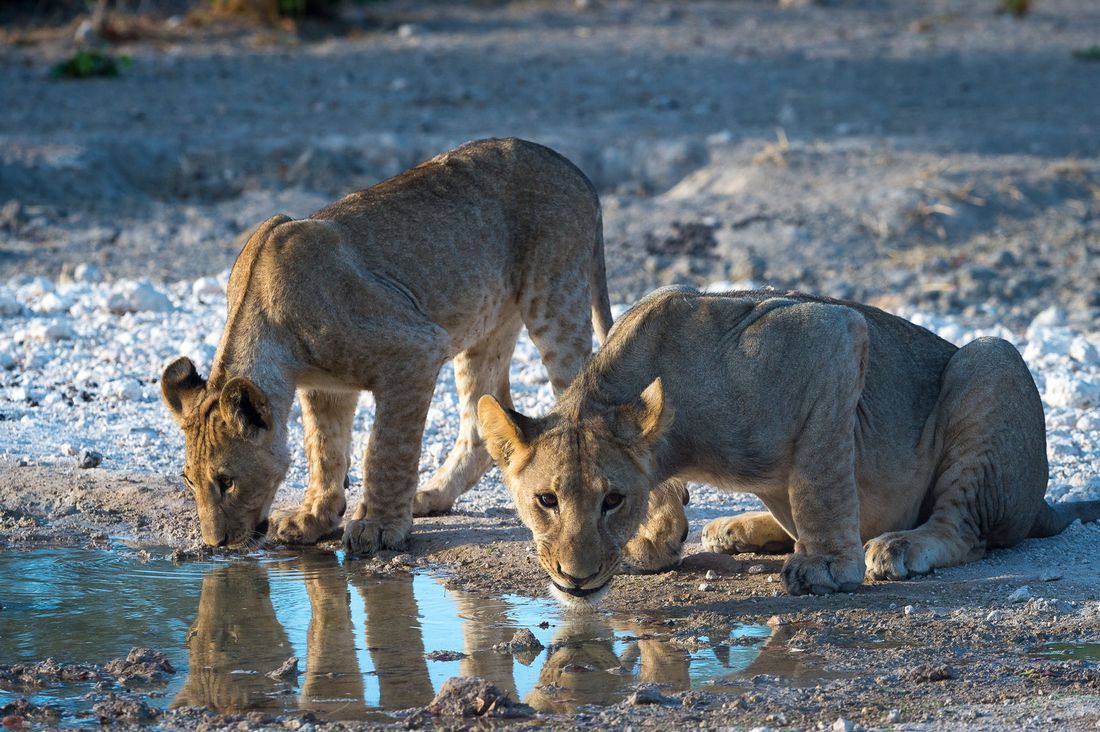
Research is central to why the camp exists, and camera-trap surveys began ahead of its development. They are building a baseline of which species live on the concession, where they are found and how they move. The preliminary surveys have recorded 26 species of mammal so far, among them elephant, lion, leopard, cheetah, brown hyena and the endemic black-faced impala.
The camp supports community projects as well. A new beekeeping project in the concession is being launched with a women’s conservation group from the Ehi-Rovipuka Conservancy, and a primary school Eco-Club is establishing an eco-garden to supplement the government feeding scheme.
Also read

How Wilderness Etosha Fits Into a Namibia Trip
Four of Wilderness’s other Namibia camps pair well with this one, and each showcases a different part of the country. Wilderness Little Kulala sets the dunes and desert of Sossusvlei against Etosha’s savannah. Desert Rhino Camp continues the conservation story beyond protected areas, into Namibia’s community-led model. Serra Cafema follows the change in landscape from the Hobatere Concession to the Kunene River. Hoanib Skeleton Coast Camp follows wildlife movement beyond Etosha towards the misty Skeleton Coast.
If I could add one camp, it would be Hoanib, because it carries on along the same land bridge that the new camp’s research is built around.
The camera-trap survey is still running, and I’m curious to see where the count of 26 stands when the first guests arrive in June 2027.


 14 nights
